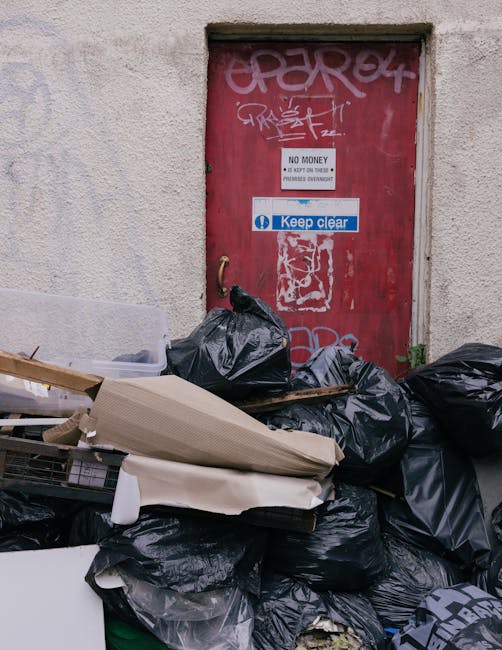
Avoid hidden rubbish removal costs in Highgate Village
Rubbish removal sounds simple until the final bill lands and you spot extras you were never expecting. A stair surcharge. A wait-time fee. A "special item" charge. Suddenly a tidy clear-out in Highgate Village feels a lot less tidy. If you want to avoid hidden rubbish removal costs in Highgate Village, the fix is usually straightforward: ask better questions, compare quotes properly, and make sure the job is scoped clearly before anyone arrives.
This guide breaks the whole thing down in plain English. You'll see where surprise charges come from, what a fair quote should include, how to compare rubbish removal services without getting caught out, and which details matter most in a real home, flat, garden, office, or renovation setting. Let's face it, nobody enjoys reading small print when there's a sofa in the hallway and old boxes everywhere. But a few minutes of preparation can save a proper headache.
Expert summary: the cheapest quote is not always the best value. The best value is the one that clearly explains labour, access, loading time, disposal, VAT, and any possible extras before the team turns up.
Table of Contents
- Why it matters
- How it works
- Key benefits and practical advantages
- Who this is for and when it makes sense
- Step-by-step guidance
- Expert tips for better results
- Common mistakes to avoid
- Tools, resources and recommendations
- Law, compliance, standards and best practice
- Options, methods and comparison
- Case study or real-world example
- Practical checklist
- Conclusion
- Frequently asked questions
Why avoid hidden rubbish removal costs in Highgate Village matters
In a place like Highgate Village, where homes, flats, period properties, basement rooms, and tight access routes are all part of everyday life, rubbish removal pricing can become complicated quickly. A quote may look fine at first glance, then creep upwards once the team sees the actual layout, the volume of waste, or the sort of items involved.
That is why hidden costs matter so much. They do not just affect your budget. They also affect trust. If a company is vague upfront, you're already working with uncertainty. And uncertainty is expensive, even before the extras start appearing on the invoice.
You might be clearing one bulky item, or you might be dealing with a full house clearance after a move, family change, or long-overdue declutter. Either way, a clear price structure gives you control. It helps you decide whether the job is worth outsourcing, whether you should sort more items yourself, and whether a same-day collection is actually good value.
Simple truth: a transparent quote is not a luxury. It is the baseline for making a sensible decision.
People often assume hidden charges only happen with very cheap operators. Not always. Even decent businesses can end up billing extra if the quote was based on incomplete information. That is why the quality of the quote matters as much as the price itself. In our experience, the best jobs are the ones where everyone understands exactly what will happen before the van arrives.
How avoid hidden rubbish removal costs in Highgate Village works
The process is basically about moving from assumptions to specifics. A trustworthy rubbish removal quote should be built around what is actually there, how easy it is to remove, and where it needs to go. Not just a rough guess from a photo taken in poor light. You know how it goes: one blurry picture of a cellar and suddenly everyone is pretending they can estimate a whole removal job by vibes alone.
What a proper quote usually considers
- Volume: how much waste you have, measured by load size, weight, or item count.
- Type of waste: general household rubbish, furniture, garden waste, builders' debris, or mixed material.
- Access: stairs, narrow hallways, parking distance, lifts, or awkward entry points.
- Labour: how many people are needed and how long loading is likely to take.
- Disposal route: whether items can be reused, recycled, or must be treated as general waste.
- Timing: same-day, weekend, out-of-hours, or booked-in collection.
- Special handling: heavy, bulky, fragile, sharp, or awkward items.
If a company gives you a price without asking about these basics, that price may be more of a teaser than a true quote. That is where hidden rubbish removal costs usually begin.
For example, if you are booking a waste removal service for a top-floor flat, the initial price may seem fair. But if the team has to carry everything down four flights of stairs, navigate narrow turns, and park a few streets away, the final cost may change unless all of that was covered from the start. None of that is unusual. What matters is whether it was explained clearly.
How prices can be structured
Different companies use different pricing models. Some charge by van load. Some price by item. Others quote based on weight, labour, or a combination of all three. The model itself is not the problem. The problem is when the model is not explained well enough for you to compare like with like.
Also, a fair quote should make clear whether disposal fees, labour, loading, and VAT are included. If that detail is missing, ask for it. Calmly, of course. No need to turn it into a courtroom drama.
Key benefits and practical advantages
Getting the price right from the beginning does more than protect your wallet. It also makes the whole project easier to manage. The benefits are practical, not abstract.
- Better budgeting: you know what the job will cost before you commit.
- Less stress: no awkward surprise when the driver arrives.
- Faster decisions: you can choose between service options with confidence.
- Cleaner comparisons: quotes are easier to compare when they are based on the same details.
- Less disruption: fewer disputes means quicker collections and smoother work.
- More control over scope: you can decide whether to split the job into parts or bundle it together.
There is also a quieter benefit. Good pricing transparency usually reflects a better-run business overall. The same company that explains charges clearly is often the one that handles access, safety, disposal, and communication more carefully too. That tends to matter when you are booking clearance for a loft, garage, or full property.
If your job includes old chairs, wardrobes, tables, or a broken bed base, you may also want to look at furniture disposal or furniture clearance options. These can be more cost-effective than paying a generic charge if the items are straightforward and easy to identify up front.
Who this is for and when it makes sense
This advice is for anyone who wants to remove waste without getting caught by vague pricing. That includes homeowners, tenants, landlords, agents, local businesses, tradespeople, and people handling a family clear-out. It also applies if you are only getting rid of a handful of items. Hidden charges can appear on small jobs too, especially where minimum fees or access issues are involved.
It makes particular sense if you are dealing with one of these situations:
- a flat with narrow stairs or limited parking
- a loft or garage that has been used for storage over years
- a garden clearance after pruning, hedge cutting, or a seasonal tidy-up
- a builder's project with mixed rubble, timber, and packaging
- an office or business unit needing careful out-of-hours removal
- a full property clear-out where you are unsure exactly how much there is
For a smaller space, a flat clearance can be ideal because the scope is usually more defined. For a larger or more cluttered property, a home clearance or loft clearance may make more sense, especially if you want one team to handle loading and sorting efficiently.
Businesses should also pay attention. A quote for business waste removal should clearly cover office access, lift use, building rules, and collection timing. Office and business settings often trigger extra admin or access coordination, and that can be where surprise costs creep in if nobody has discussed them.
Step-by-step guidance
If you want to avoid hidden rubbish removal costs in Highgate Village, use a simple process. It sounds basic, but it works.
1. Sort your waste into clear groups
Start by separating items into general rubbish, reusable items, recyclable materials, and anything potentially hazardous or specialist. You do not need a perfect audit. Just make it easier for the quote to be realistic.
2. Measure what can be measured
Estimate room size, pile size, number of bags, number of bulky items, and whether anything is unusually heavy. A quick photo with a visible reference point helps far more than a vague description like "quite a lot". Quite a lot means very different things to different people.
3. Note access conditions
Tell the company about stairs, tight corners, permits, parking distance, shared entrances, and any lift restrictions. These details are rarely dramatic, but they are often decisive.
4. Ask what is included
Do not stop at the headline price. Ask whether labour, loading, disposal, congestion or parking complications, VAT, and waiting time are included. If anything is excluded, get it in writing before you book.
5. Check item-specific charges
Some companies charge more for certain items because they need special handling. Large wardrobes, mattresses, white goods, or mixed construction waste can all be treated differently. If the quote does not mention this, ask.
6. Compare two or three clear quotes
Once you have the same information sent to each company, compare the numbers fairly. If one quote is much lower, ask why. Maybe it excludes disposal. Maybe it assumes easier access. Maybe it is simply too optimistic. You want clarity, not a pleasant surprise followed by a less pleasant one.
7. Confirm the final scope before collection
On the day, make sure the job still matches the quote. If extra items have appeared, say so before the team starts loading. That small step can prevent an argument later.
Expert tips for better results
A few small habits make a big difference here. Nothing fancy. Just sensible, steady choices.
- Take photos in good light: daylight or bright indoor lighting helps the company judge the volume more accurately.
- Group similar items together: this makes it easier to spot what can be reused, recycled, or disposed of separately.
- Ask about minimum charges: a small job can still attract a minimum fee, so check whether the quote is efficient for your scale.
- Be honest about awkward access: it may feel tedious to mention, but it is cheaper than a last-minute surprise.
- Keep one decision-maker available: if the team needs approval on the day, delays can create extra labour time.
- Separate valuable items early: if something can be sold, donated, or kept, remove it before collection. Saves hassle, and yes, a bit of money too.
One thing people often miss is the difference between cheap and clear. A cheap quote that ignores access is not a bargain. It is a delay waiting to happen. A clear quote might cost a touch more, but if it includes what you actually need, it is usually better value.
If you are clearing items from a garden or outdoor storage area, a garden clearance service can sometimes be better than mixing green waste with general rubbish. Likewise, if the job includes bins, sheds, or cluttered outbuildings, a garage clearance may be the more accurate service type and help avoid pricing drift.
Common mistakes to avoid
The biggest pricing mistakes are usually simple ones. That is the annoying part. They are easy to avoid once you know what to watch for.
- Only asking for a headline price: you need the full breakdown, not just the cheapest number.
- Underestimating volume: one extra pile of waste can change the job more than you expect.
- Ignoring access: stairs and parking are not side issues; they are part of the job.
- Mixing unrelated waste streams: builders' waste, furniture, and household rubbish may be priced differently.
- Assuming VAT is included: confirm it, don't guess.
- Forgetting about special items: anything heavy, awkward, or specialist needs checking.
- Not reading the terms: a five-minute scan can prevent an expensive misunderstanding later.
One more subtle mistake is not asking what happens if the job changes on arrival. Life is messy. A cupboard reveals three more boxes, the loft has more bags than expected, or someone finds a pile of old tiles behind the shed. Fair enough. But the price should still be based on a clear rule, not improvisation.
Tools, resources and recommendations
You do not need specialist software or a complicated spreadsheet. A few everyday tools are enough.
- Phone camera: take clear images of each area to be cleared.
- Notebook or notes app: list item types, quantities, and access details.
- Measuring tape: useful for bulky furniture, sheds, or boxed items.
- Simple checklist: helps you confirm what stays, what goes, and what needs special handling.
- Calendar reminder: useful if you are coordinating movers, tradespeople, or tenancy deadlines.
From a service perspective, it helps to work with a company that publishes transparent information about pricing and quotes and shows how it approaches recycling and sustainability. That does not guarantee perfection, obviously, but it gives you a better sense of whether the business thinks carefully about disposal rather than just tipping everything into the nearest cost bucket.
You may also want to review a company's policies if you value trust and accountability. Pages such as about us, insurance and safety, and payment and security can help you judge how seriously the business handles operations and customer protection.
Law, compliance, standards and best practice
When rubbish is removed, it is not just about convenience. Waste handling in the UK carries legal and environmental responsibilities, and reputable operators usually work within those expectations. You do not need to know every detail, but you should expect the company to act properly with the waste it collects.
In practical terms, that means a few things. Waste should be transported and disposed of lawfully. Duty of care matters. Items should be sorted responsibly where possible. And if a business is removing waste from your property, it should be able to explain how it handles disposal, recycling, and safety. That is especially relevant for trades waste, office clearances, and mixed loads.
Best practice also includes honest quoting, clear terms, and sensible safety arrangements during loading. If a team is moving heavy furniture or navigating stairs, you want to know they have considered the risks. Good operators typically have clear health and safety policy information and straightforward terms that explain how the job is managed. That kind of transparency is worth more than polished sales talk.
For households, landlords, and small businesses, the safest approach is simple: ask where the waste goes, ask what is included, and keep a copy of the agreed scope. If something feels fuzzy, it probably is.
Options, methods and comparison
There is more than one way to get rid of waste, and the right option depends on how much you have, how quickly you need it gone, and how much effort you want to put in yourself.
| Method | Best for | Cost clarity | Typical risk of hidden charges | Notes |
|---|---|---|---|---|
| Pre-quoted collection service | Mixed household loads, bulky items, clear-outs | High if the scope is detailed | Low to medium | Best when access and item type are explained upfront. |
| Ad hoc same-day booking | Urgent removals | Medium | Medium to high | Convenient, but only if you confirm exclusions before arrival. |
| DIY disposal | Small, manageable loads | High in theory, low in time value | Low | May save money, but factor in time, transport, and lifting. |
| Specialist clearance | Lofts, garages, gardens, offices, builder debris | High when clearly scoped | Low to medium | Best for awkward, specific, or heavily loaded spaces. |
If you have a particular type of job, a specialist page can help you match the service to the waste more accurately. For example, builders waste clearance is more relevant for renovation debris, while office clearance is better for desks, chairs, IT clutter, and commercial waste from a business move. Matching the service to the waste type usually reduces confusion and cost creep.
Case study or real-world example
Here is a realistic example. A couple in Highgate Village were clearing a first-floor flat before a tenancy change. The initial job sounded simple: a wardrobe, two mattresses, several boxes, and some old kitchen bits. The first quote they received was low, but it was based on only one photo and no access details.
They then took a few more photos in daylight, measured the wardrobe, and mentioned the narrow staircase, shared entrance, and awkward parking. The revised quote was higher, but it was also honest. It included the time needed to carry items safely downstairs, plus disposal and labour. No surprises later. No awkward phone calls. Just a smooth collection, the stairwell kept clear, and the keys handed back on time.
That second quote looked less exciting. But it was the one that worked. In real life, that is often the difference between a good booking and a frustrating one. If you want the job done once, properly, and without the "oh, by the way" fee at the end, transparency is the thing to protect.
Practical checklist
Use this before you book. It takes a few minutes and can save you a fair bit.
- Have I listed every item or waste type that needs removing?
- Have I shared clear photos or a realistic description?
- Have I mentioned stairs, parking, lifts, or narrow access?
- Do I know whether labour and loading are included?
- Have I asked about VAT and any minimum charges?
- Do I understand whether special items cost more?
- Have I checked whether recycling or reuse is part of the service?
- Have I read the terms and conditions carefully?
- Am I comparing like-for-like quotes?
- Do I have the agreed scope confirmed before the team arrives?
If you can tick most of those off, you are already ahead of the game. Not glamorous, maybe. Effective, absolutely.
Conclusion
To avoid hidden rubbish removal costs in Highgate Village, focus on clarity before collection day. Be specific about what you need removed, how accessible it is, and what sort of service you are actually booking. Ask for an itemised or at least well-explained quote. Check the terms. Confirm the scope. Simple, really, but it makes all the difference.
Whether you are clearing a flat, a loft, a garage, a garden, or a full property, the best outcome is the one where the price matches the reality on the ground. A little diligence now means fewer surprises later, and that is worth doing properly.
Get a free quote today and see how much you can save.
And if you are still comparing options, take your time. A good clearance should leave the space lighter, not your mood.
Frequently Asked Questions
What are the most common hidden rubbish removal costs?
The most common extras are access charges, labour time, waiting time, disposal fees, VAT, and charges for heavy or awkward items. These usually appear when the job was not described in enough detail.
How can I compare rubbish removal quotes properly?
Compare them using the same information: item list, estimated volume, access details, timing, and whether labour and disposal are included. If one quote is much lower, check what it leaves out.
Do I need photos before getting a quote?
Photos are very helpful, especially if the job involves bulky items or a cluttered space. Clear daylight photos with a bit of context make pricing much more accurate.
Is a van-load price always the cheapest option?
Not necessarily. A van-load price can work well, but only if the company explains what counts as a load and whether access, loading time, and disposal are included.
Why does access affect the cost so much?
Because stairs, distance from parking, narrow hallways, and lift restrictions all change how long the job takes and how much labour is needed. That extra effort has to be priced somehow.
Can furniture removal be cheaper than general rubbish removal?
Sometimes yes, because furniture can be quoted as a specific type of item. If you have sofas, tables, wardrobes, or beds, a more targeted service may give a clearer price.
Should I ask about recycling before booking?
Yes, if that matters to you. A company that explains how it handles reuse and recycling is usually more transparent about its disposal process overall.
What should I do if extra items appear on the day?
Tell the team before loading starts. That way the quote can be adjusted openly if needed. Surprises happen, but they should not become disputes.
Are business clearances priced differently from home clearances?
They often are, because offices and business premises may involve building rules, timing restrictions, or different waste streams. It is worth checking business waste removal and office clearance options if the job is commercial.
What if I only have one or two bulky items?
Small jobs can still carry minimum charges, so ask for the full cost before you book. A simple, item-based quote is often the best place to start.
Do I need to read the terms and conditions?
Yes, even if it feels dull. It is usually where the company explains exclusions, timing rules, payment expectations, and how it handles changes to the job.
How do I know if a rubbish removal company is trustworthy?
Look for clear pricing, sensible communication, visible policy information, and a willingness to explain the scope properly. Trust usually shows up in the small details, not the loudest promise.