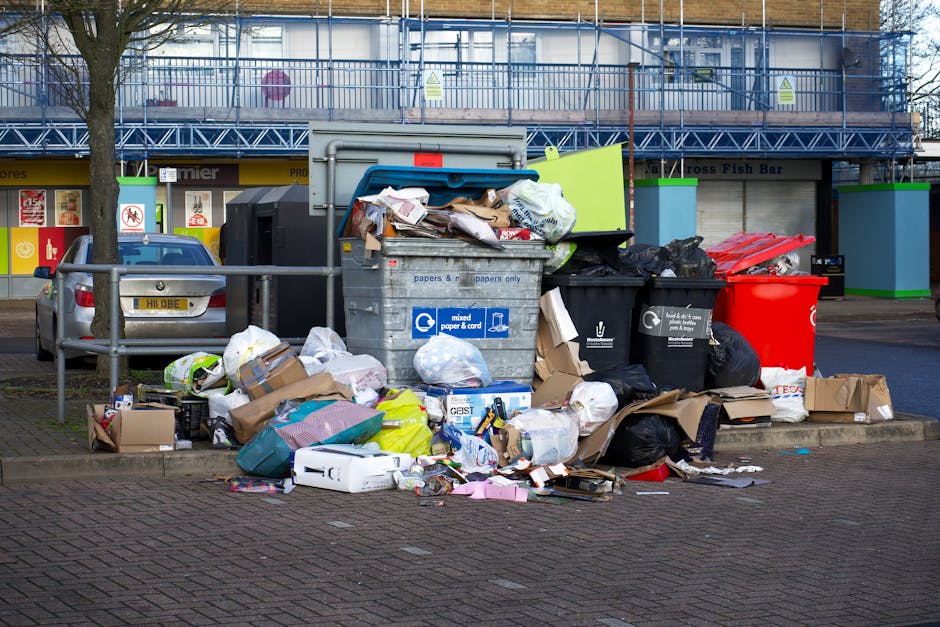
Highgate N6 rubbish collection guide for narrow streets
If you live or work in Highgate N6, you already know the problem: rubbish collection sounds simple until the street narrows, the parking gets tight, and a bulky item suddenly becomes a small logistics project. This Highgate N6 rubbish collection guide for narrow streets is written for exactly that situation. It explains how to clear waste safely, avoid common delays, and choose the most practical method when access is awkward, turning circles are limited, or a standard collection vehicle just can't get close enough. Truth be told, a lot of the stress comes from the access, not the rubbish itself.
In the next sections, you'll find a clear breakdown of how narrow-street collections usually work, what to prepare in advance, which mistakes to avoid, and when a professional service can save you a lot of back-and-forth. If you want a broader overview of the company's services while planning a clearance, you can also look at waste removal options or explore home clearance support for bigger jobs that need a bit more coordination.
Practical summary: the narrower the street, the more important it is to plan access, item placement, and timing before collection day. A good plan cuts down on lifting, waiting, and the slightly maddening moment when everyone's standing around a sofa that won't fit through the gap. We've all seen that scene.
Table of Contents
- Why Highgate N6 rubbish collection guide for narrow streets Matters
- How Highgate N6 rubbish collection guide for narrow streets Works
- Key Benefits and Practical Advantages
- Who This Is For and When It Makes Sense
- Step-by-Step Guidance
- Expert Tips for Better Results
- Common Mistakes to Avoid
- Tools, Resources and Recommendations
- Law, Compliance, Standards, or Best Practice
- Options, Methods, or Comparison Table
- Case Study or Real-World Example
- Practical Checklist
- Conclusion
- Frequently Asked Questions
Why Highgate N6 rubbish collection guide for narrow streets Matters
Narrow streets change everything. In Highgate N6, access can be affected by parked cars, tight corners, limited stopping points, steep gradients, and the simple fact that one vehicle may block the road if it stops in the wrong place. That matters whether you are clearing household rubbish, old furniture, loft contents, garden waste, or light builders' debris. A collection that would be easy on a wide residential road can become awkward very quickly in a terrace, mews-style lane, or cul-de-sac with no real loading space.
It also matters because the consequences of poor planning are annoying and sometimes costly. Missed collections can mean extra waiting, repeated lifting, or waste left outside longer than planned. And if items are placed badly, they can obstruct neighbours, pedestrians, delivery drivers, or emergency access. Nobody wants to be "that house" on a narrow street, and let's face it, the neighbours notice.
There's also a trust factor. When you book a clearance in a tight-access area, you want the collection team to understand the layout, not just the postcode. The best outcomes usually come from services that think about access in advance, ask the right questions, and arrive prepared with the right vehicle size, manpower, and timing window.
How Highgate N6 rubbish collection guide for narrow streets Works
A narrow-street collection usually starts with access assessment. That means working out whether the collection team can park close enough to the property, whether items need to be carried a short distance, and whether any restrictions apply on the day. In practical terms, the process often involves a short conversation about your road width, loading options, the type of waste, and how much needs removing.
For smaller jobs, the collection may be straightforward: items are brought to the front boundary, the team loads them quickly, and the vehicle leaves with minimal disruption. For larger or more awkward jobs, the waste may need to be staged inside the property, in a hallway, on a drive, or in another safe pickup point. That is especially common with furniture clearance, loft contents, and mixed household rubbish. If the access is tricky but the items are manageable, a service such as furniture clearance can be a sensible fit.
In some cases, narrow access means a collection team has to use smaller vehicles or make more than one run. That is not unusual. It just needs planning. A team that knows London streets will usually think about parking pressure, collection timing, and how to avoid blocking the route for too long. A five-minute delay on a narrow road can feel much longer when a van is half across the lane and somebody is waiting to get past.
It's also worth saying that a well-run collection is about more than removal. Responsible operators should separate reusable items where possible, sort recyclable materials, and handle waste in line with proper disposal practices. If sustainability matters to you - and it should, honestly - a page like recycling and sustainability gives a sense of the approach you should expect.
Key Benefits and Practical Advantages
The main benefit is simple: less hassle. But there are several practical advantages to planning rubbish collection carefully in a narrow Highgate street.
- Less disruption: Proper planning reduces the time a vehicle needs to stop in the road.
- Safer lifting: Shorter, clearer routes mean less carrying through awkward spaces.
- Fewer missed collections: If the team knows the access issues, they arrive ready.
- Better speed: Items can be removed in one smooth visit rather than several uncertain attempts.
- More predictable pricing: When access is understood early, quotes tend to be more accurate.
- Less neighbour friction: That matters more than people admit. A tidy, efficient job keeps everyone calmer.
There is also a practical comfort in knowing that the job has been thought through. If you've got a full hallway, a mattress wedged upstairs, or garden waste piling up by the back gate, a narrow-street collection can feel like a relief rather than another thing on the list. That quiet sense of order is underrated.
For property moves, downsizing, or tenancy handovers, this becomes even more valuable. A service such as house clearance or flat clearance can help when the job is bigger than a simple bin-day tidy-up and the access is not exactly generous.
Who This Is For and When It Makes Sense
This guide is for anyone dealing with rubbish collection in a street that is narrow, busy, or awkward to access. That includes homeowners, renters, landlords, managing agents, small businesses, tradespeople, and people clearing out inherited or long-untouched spaces. If you've ever looked at a pile of waste and thought, "Fine, but how exactly is this leaving the building?", then yes, this is for you.
It makes sense when:
- the road is too tight for large vehicles to stop for long;
- parking is limited or permit-controlled;
- you need to remove bulky items from a basement, loft, or upper floor;
- you're clearing a property between tenancies;
- you have mixed waste that cannot simply be left for regular collection;
- you want a cleaner, quicker removal than repeated small trips in your own car.
It is also relevant for businesses with restricted access, particularly if waste must be removed outside trading hours. In those cases, business waste removal can be a practical route, especially when access and timing need to be handled with care.
A narrow street does not mean a difficult job by default. Sometimes it just means the right method matters more. That's the difference.
Step-by-Step Guidance
Here's a practical way to organise rubbish collection in a Highgate N6 narrow street without the last-minute scramble.
- List what needs removing. Separate general rubbish, bulky items, furniture, garden waste, and construction debris. This helps with capacity and pricing.
- Check access properly. Think about road width, parking, entry points, stairs, and any obstacles like low branches or tight bends.
- Measure the awkward items. Sofas, wardrobes, mattresses, and appliances are often harder to move than people expect.
- Decide where items will be staged. A front room, hallway, driveway, or yard can make the collection safer and faster.
- Remove anything you want to keep. Obvious, yes, but mistakes happen when the house is noisy, busy, or half-packed.
- Choose the right collection method. For example, general waste removal, furniture disposal, loft clearance, or builders' waste may each need a slightly different approach.
- Confirm timing. Narrow roads are often easiest early in the morning or during quieter periods, depending on local conditions.
- Prepare for loading. Clear the path, open gates, and make sure the team can move without weaving around obstacles.
- Ask about sorting and recycling. A good service should explain what will be reused, recycled, or disposed of separately.
- Keep the day simple. If possible, avoid adding extra items at the last minute. It always sounds harmless until the van is already on site.
One useful habit: take a quick phone photo of the items and access route before the collection. Not glamorous, admittedly, but it helps everyone see the same thing. And that can stop a lot of confusion.
Expert Tips for Better Results
In our experience, the best narrow-street collections are the ones that are planned like a small project, not treated like a spontaneous favour. Here are a few details that make a real difference.
1. Think in carrying distance, not just postcode
A van can be "nearby" in theory and still be far away in practical terms. If your front door is 40 metres from the nearest legal stopping point, that changes the job. It affects labour, time, and the amount of handling required.
2. Separate fragile from heavy
If you have mixed waste, place fragile bags or breakables away from sharp edges, broken wood, or metal. Nobody wants a bag splitting halfway down the path. It's a tiny thing until it isn't.
3. Use the front boundary as a staging zone where possible
Even if you cannot leave waste on the pavement, a private front area or hallway staging point can reduce the amount of carrying. That can be especially helpful for garage clearance or loft clearance jobs where the items are bulky but not hazardous.
4. Keep the route clear before the team arrives
It sounds obvious, but it saves time. Move shoes, bikes, plant pots, bins, and anything else that can snag a wheel or trip a person. A narrow corridor feels even narrower once a mattress is being turned sideways.
5. Ask how the service handles reusable items
If you have decent furniture or usable household items, ask whether they can be diverted for reuse or handled through a more appropriate route. If disposal is the right answer, furniture disposal may be more suitable than a general load.
6. Be realistic about timing
Narrow streets are not the place for vague estimates like "sometime after lunch." If you've got neighbours, school runs, or delivery windows in play, be specific. The calmer the schedule, the better the day usually goes.
Common Mistakes to Avoid
Most issues in narrow-street rubbish collection come from assumptions. Fair enough, people are busy. But a few repeated mistakes cause most of the trouble.
- Underestimating the access issue. "It'll be fine" is not a plan.
- Leaving everything until collection day. Sorting while the vehicle is waiting is stressful and slows the job down.
- Forgetting about stairs. A second-floor flat with a tight stairwell is a very different job from a ground-floor terrace.
- Mixing waste types carelessly. Builders' debris, household rubbish, and electrical items may need different handling.
- Blocking shared access. In London, shared driveways and narrow mews lanes can become tense very quickly if items are placed badly.
- Not checking what can and cannot be taken. Some waste streams need special handling, so it's better to ask up front.
- Ignoring neighbour impact. A little courtesy goes a long way on tight streets.
Another one: assuming all collection providers work the same way. They don't. Some are better suited to awkward access, some aren't. Some are used to handling heavier domestic loads, others are better for straightforward waste removal. It's worth matching the job to the service.
Tools, Resources and Recommendations
You do not need fancy equipment, but a few basic things make collections smoother.
- Measuring tape: Useful for checking stair width, doorway clearance, and bulky furniture dimensions.
- Strong sacks or boxes: Especially for smaller mixed rubbish that would otherwise spill.
- Labels or markers: Handy if you're separating keep, donate, recycle, and remove.
- Gloves: A simple pair of work gloves saves a lot of scraped hands.
- Phone camera: Great for documenting what's going and showing access conditions in advance.
- Tidy staging space: A few square metres of clear floor can make the whole process feel less frantic.
If you're dealing with mixed domestic items, the most relevant services are often house clearance, home clearance, or a more targeted job such as garage clearance. For workspace clean-outs, office clearance may be the better fit. The point is to match the service to the waste, not just the location.
You can also review pricing and quotes if you want a better sense of how jobs are assessed. That's usually the sensible next stop before booking anything.
Law, Compliance, Standards, or Best Practice
When rubbish is collected from a narrow street, compliance is not just a box-ticking exercise. It is part of keeping the street safe and keeping the disposal chain responsible. In the UK, waste must be handled in line with proper duty-of-care practices, which in plain English means the waste should be passed to people who are authorised and the route it takes should make sense. You do not need to memorise the rules, but you should know that reputable operators take this seriously.
Best practice also includes safe lifting, sensible parking, avoiding obstruction, and separating recyclable materials where practical. If a job involves heavier or sharper waste, especially from refurbishments, it should be managed carefully. That is one reason a specialist builders' waste clearance approach can be more appropriate than a generic collection for renovation debris.
For customers, the practical takeaway is straightforward: ask how the waste will be handled, whether there are any exclusions, and how access issues will be managed on the day. A clear answer is a good sign. A vague one, not so much.
You should also expect responsible providers to work with basic health and safety standards, insurance awareness, and secure payment handling. Those details may feel secondary when you just want the junk gone, but they matter. A lot.
Options, Methods, or Comparison Table
Different collection methods suit different access situations. Here's a simple comparison to help you decide what makes sense.
| Method | Best for | Pros | Watch out for |
|---|---|---|---|
| Kerbside-style pickup | Small, well-bagged loads with easy frontage access | Fast and simple | Not ideal if the street is too narrow or parking is restricted |
| Man-and-van clearance | Mixed household items, bulky furniture, and moderate volumes | Flexible, personal, usually easier on tight streets | Needs good access information in advance |
| Room-to-vehicle clearance | Loft, flat, or house clearances with awkward carrying routes | Efficient for larger indoor jobs | More labour intensive if access is poor |
| Specialist waste removal | Mixed waste, recurring loads, or business premises | Suitable for repeat needs and organised disposal | Requires clearer categorisation of waste types |
For many Highgate N6 streets, the middle ground works best: enough flexibility to handle access constraints, but enough structure to keep the job tidy. That is why a service like waste removal often makes sense when you're not sure whether the job is "small" or "quite a lot, actually."
Case Study or Real-World Example
Here's a realistic example. A resident in a narrow Highgate side street needs to clear a one-bedroom flat after redecorating. There are two bulky armchairs, a broken shelving unit, several bin bags, and a mattress that has somehow become more annoying the longer it sits there. The road is tight, parking is limited, and there is no space for a large vehicle to wait outside for long.
The solution is not dramatic. First, the resident moves everything into the front room and hallway the evening before. Then they send a few photos of the access route and items. On the day, the team arrives with a vehicle suitable for the street width, loads quickly, and avoids blocking the lane longer than necessary. The whole thing is done in one visit. Not magical. Just planned properly.
That sort of job is where a flat clearance service is particularly useful, because it combines access awareness with enough manpower to manage stairs, tight corners, and bulky items without turning the day into a minor ordeal.
The main lesson? A narrow street doesn't have to mean a difficult clearance. It just means you win by preparing early. A little calm goes a long way.
Practical Checklist
Use this checklist before collection day. It keeps things simple.
- Confirm exactly what is being removed.
- Measure any bulky furniture or awkward items.
- Check the width of doors, stairwells, and hallways.
- Identify the nearest legal stopping or loading point.
- Clear a safe route from the property to the vehicle.
- Separate items you want to keep.
- Put small rubbish into strong, manageable sacks or boxes.
- Make sure shared access areas remain usable.
- Notify neighbours if the collection may affect the road briefly.
- Confirm the collection time and any parking or access notes.
- Ask about recycling and disposal of different waste types.
- Keep pets, children, and clutter away from the working area.
Quick reality check: if the route feels tight to you, it will probably feel tight to the collection team too. That's not a problem, just a cue to prepare a bit better.
Conclusion
A good Highgate N6 rubbish collection guide for narrow streets is really about making a tricky access situation feel manageable. When the road is tight, success comes from planning the route, choosing the right collection method, staging items properly, and keeping the day as uncluttered as possible. That applies whether you are clearing a single sofa, a loft full of boxes, or a whole property that needs careful handling.
If you remember only one thing, make it this: narrow streets need clarity more than speed. Know what's going, know where it will be collected from, and choose a team or service that understands the practical realities of Highgate's tighter access points. That alone prevents a surprising amount of stress.
Get a free quote today and see how much you can save.
And if you're standing at the door looking at a pile of rubbish and a very small stretch of road, take heart. It's usually more doable than it first looks.
Frequently Asked Questions
What is the best way to arrange rubbish collection on a narrow Highgate street?
The best approach is to confirm access first, stage the waste as close to the property boundary as safely possible, and choose a collection method that suits tight road conditions. Sending photos in advance helps a lot.
Can bulky furniture be collected from a narrow road?
Yes, often it can. The key question is not just the furniture size but whether the team can park or stop close enough to remove it safely. If access is awkward, furniture clearance or furniture disposal may be the better fit.
Do I need to move waste outside before the collection team arrives?
Usually, yes, if the provider has asked for items to be ready. In narrow streets, having waste staged in advance reduces loading time and keeps the road clear for everyone else.
What happens if a van cannot park right outside my property?
The team may need to carry items from a legal stopping point or adjust the vehicle size. This is common in London and is exactly why access details should be shared before the job is booked.
Is narrow-street rubbish collection more expensive?
It can be, depending on carrying distance, labour, vehicle access, and item type. The fairest way to find out is to request a quote based on the real access conditions rather than guessing.
What types of waste are commonly collected in Highgate N6?
Common examples include household rubbish, old furniture, garden waste, loft contents, garage clutter, office waste, and some renovation debris. Mixed loads are common in older streets with tight access.
Can I book a collection for a flat with no lift?
Yes. Flat clearance is a standard type of job, but stairs, landings, and hallway width matter. It helps to mention every awkward bit early so the team can plan the right approach.
What should I do with recyclable items?
Separate them if you can, especially cardboard, metal, clean wood, and reusable furniture. It makes the load easier to sort and supports better waste handling overall.
How do I avoid blocking neighbours or deliveries?
Choose a sensible time, keep the route clear, and keep the collection window tight. In a narrow street, a short, well-organised visit is always better than a slow, uncertain one.
Is it better to use a general waste service or a specialist clearance service?
If you have bulky items, mixed household contents, or a property with difficult access, a specialist clearance service is usually more practical. For smaller or more routine loads, general waste removal may be enough.
What should I ask before booking a collection?
Ask what access information they need, whether they can handle stairs or narrow passages, what happens with recyclable items, and whether they have experience with streets like yours. Clear answers are a good sign.
Can you handle garage, loft, or garden waste on narrow streets too?
Yes, provided the route is workable and the waste is described clearly. Services such as garage clearance, loft clearance, and garden clearance are often best planned in advance when access is tight.